Skip to content
Buying guide

Types of stone cladding, compared

Riven, drypack, random or panels? The format you choose decides how your wall looks and how long it takes to build — here’s how to pick.

Natural stone cladding comes in four main formats. They can all be cut from the same stone — slate, quartzite or sandstone — but they give completely different walls, and they ask very different things of the person installing them.

Choose the format first, then the stone and colour. As a rule of thumb: the more the stone is prepared before it reaches you, the faster and more predictable the installation; the less it is prepared, the more the finished wall depends on your stonemason’s eye — and the more character it can have.

The four formats

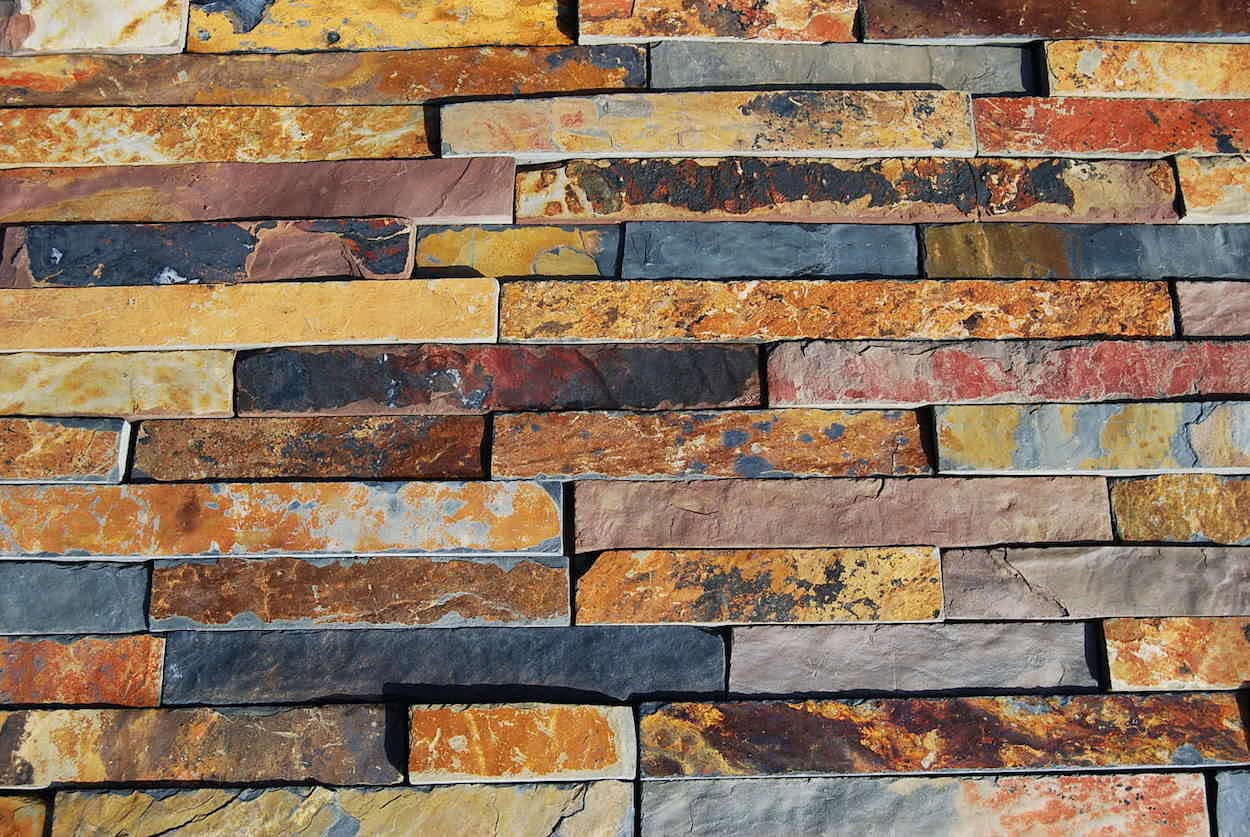
Riven (stack-stone) strips — natural stone cladding by Stone Library

Riven (stack-stone) strips

The look
Tight horizontal courses of narrow split-face strips with no visible joint.
How it’s supplied
40–60 mm high strips in random lengths, packed 1 m² per level.
Best for
Fireplaces, entrance walls, patio and braai walls, columns.
See the range
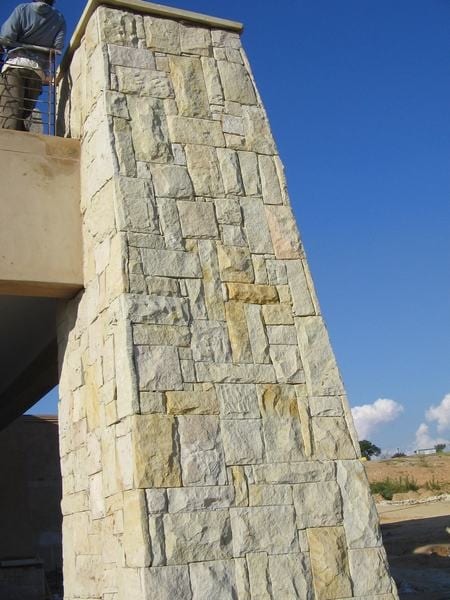
Drypack & building stone — natural stone cladding by Stone Library

Drypack & building stone

The look
Chunkier blocks laid like a traditional dry-stone wall, with depth and shadow.
How it’s supplied
Sawn sandstone blocks in a five-size mix, or split quartzite building stone standing 60–80 mm from the wall.
Best for
Façades, gate pillars, boundary and garden walls.
See the range
Random & vertical cladding — natural stone cladding by Stone Library

Random & vertical cladding

The look
Irregular pieces fitted together in an organic, “crazy-paved” pattern.
How it’s supplied
Random split pieces standing 20–50 mm from the wall, supplied by the pallet or per m².
Best for
Feature pillars, chimney breasts, rustic and farmhouse walls.
See the range
Interlocking panels — natural stone cladding by Stone Library

Interlocking panels

The look
The stack-stone look, pre-assembled — panels lock together so the joins vanish.
How it’s supplied
Boxed panels with a fixed coverage, from 0.378 m² to 1 m² per box.
Best for
Indoor feature walls, TV walls, commercial interiors on a tight programme.
See the range

Then choose the stone

Slate gives the warmest, most varied colour — rusts, golds, pinks and charcoals — in thin, light strips. Quartzite is the hardest and most colour-fast, often with a natural shimmer, and is the safest choice for a wall in full sun. Lesotho sandstone is the palest, giving a clean cream-to-gold wall that brightens an entrance or boundary.

Our honest advice

For a single indoor feature wall, interlocking panels or riven strips give the best result for the least disruption. For a façade, boundary wall or pillars you’ll see every day for decades, building stone or drypack in quartzite or sandstone is worth the extra labour. If you’re unsure, send us a photo of the wall — we’ll tell you what we’d put on it and why.

Good to know

Stone cladding: your questions answered

Which type of stone cladding is easiest to install?

Interlocking panels are the quickest: the stone strips are already bonded into panels that slot together, and each box covers a known area. Riven strips come next. Random, vertical and building-stone cladding take the most skill, because the stonemason shapes and fits each piece.

What is the best stone cladding for exterior walls?

Quartzite is the hardest and most colour-fast, which makes it the first choice for façades and boundary walls in full sun. Lesotho sandstone and slate are also used outdoors and should be sealed to protect the surface.

What is the difference between riven and drypack cladding?

Riven cladding uses narrow strips, 40–60 mm high, stacked in fine horizontal lines. Drypack cladding uses larger blocks in mixed sizes, from 100 × 100 mm to 400 × 200 mm, for a chunkier dry-stone look.

How do I work out how much stone cladding I need?

Multiply the width of the wall by its height in metres to get the area, subtract any windows or doors, and add about 10% for cuts and corners. Riven cladding is packed 1 m² per level and panels have a fixed coverage per box. Send us the dimensions and we’ll calculate it for you.

Can the same stone cladding be used indoors and outdoors?

Yes. Natural stone cladding is coloured all the way through and suits both interior feature walls and exterior façades, pillars and boundary walls — so one stone can carry from the entrance into the house.
Ready when you are

Not sure which cladding suits your wall?

WhatsApp us a photo with rough dimensions and we’ll recommend a format, estimate coverage and send a free quote.

Free, no-obligation quotes · fast replies during business hours 4.3 on Google (28 reviews)

Chat with us
Get in touch

Get a free quote

Free and no-obligation — we usually reply within the hour on WhatsApp during business hours. Prefer to talk now? Call us directly.

Skip the form — chat to us on WhatsApp now

All fields are optional — WhatsApp shares your name and number with us automatically. Have a photo or plan of your space? Attach it in WhatsApp for a faster, more accurate quote.

Or call 010 594 2083